Guest Blog by Rebecca Vize, Retail Pulse Advantage.

As we head towards peak trade, charitable retailers have plenty to prepare: more stock to process, volunteer rosters to fill, Christmas plans to finalise and stores to keep on top of. 

But before adding another task to the list, I want to suggest something simple. 

Walk into your own store and pretend to be a customer. 

Not a manager. Not a volunteer. Not someone who knows where everything is or why things are done a certain way. 

Actually shop. 

Through my work with charitable retailers, I spend a lot of time observing stores through the eyes of the customer. And often, some of the biggest opportunities don’t require a major investment, new technology or a complete store refit. 

They’re hiding in plain sight. 

Here are 10 things I’d be looking at as we head towards peak trade. 

  1. Start before you walk through the door

Stand outside your store. What does a customer see? Is it welcoming? Can they quickly understand what you offer? Is the window telling a story or simply displaying stock? 

And look at your signage. Necessary messages around donations, theft or store policies don’t have to feel confrontational. Consider the overall message your front door sends before anyone has even stepped inside. 

  1. Notice what happens when you enter

Are you acknowledged? One of the biggest opportunities I see isn’t necessarily a lack of people in stores — teams and volunteers are often incredibly busy putting stock away, sorting donations, pricing and cleaning. But customers can be walking around them without a simple hello. 

A smile and “Hi, how are you?” costs nothing. So does “Thanks for coming in” when someone leaves without making a purchase. 

  1. Actually try to shop the racks

Don’t straighten them. Shop them. 

Can you comfortably move the hangers? Can you see the sizes? Are racks packed so tightly that discovering something great feels like hard work? 

There isn’t one perfect merchandising model for every op shop. Depending on your customer, stock and store size, you might merchandise by size, category, season, colour or a combination. The important question is: does it make shopping easier? 

  1. Make pricing easy to understand

Customers shouldn’t need a calculator or a team member to work out what something costs. 

Walk your store and look at your tickets, promotional signage and pricing from a customer’s perspective. Is it consistent? Is it obvious? Can someone make a quick purchasing decision without having to decipher the offer? 

Clarity removes friction. 

  1. Curate, don’t just put stock out

One of the wonderful things about charitable retail is that you never quite know what is going to come through the donation door. 

Use that to your advantage. Try a New In rack. Volunteer Picks. Designer Finds. Under $20. Seasonal Edit. 

Small curated collections can create interest, make the store feel fresh and help customers discover products they may otherwise have walked straight past. 

  1. Use the retail calendar

You don’t need a huge visual merchandising budget to create a reason for customers to explore. Think about what’shappening in your customers’ lives — Spring Racing, formal season, Halloween, Christmas gifting — and pull together a small edit around it: dresses, shoes, bags and jewellery for a formal event, or homewares, books and accessories for gifting. 

You’re not changing your stock. You’re helping customers imagine what they can do with it. 

  1. Look at the fitting-room experience

If you sell clothing, don’t underestimate the fitting room. Can customers find it? Is it clean and inviting? Is it being used as storage? Are customers encouraged to try things on? 

A simple “Would you like to try that on?” can be both helpful service and the beginning of a genuine conversation. 

  1. Tell people what their purchase makes possible

This is something charitable retailers have that most commercial retailers would love to have: a genuine story and purpose behind the transaction. Don’t assume your customers know it. 

Can they see the impact their purchase helps create? Do your volunteers and team members feel confident explaining it? Connecting the purchase to the purpose gives people another reason to choose you, return and tell others about you. 

  1. Prepare your people for peak — not just your stock

Peak preparation often focuses on stock, rosters, donations, displays and logistics. But what experience do you want your customers to have? 

Before peak, consider giving everyone three simple customer experience behaviours they can remember, regardless of whether they work one shift a week or five days. It could be as simple as: Acknowledge. Help. Thank. 

  1. Then walk your store again

Better still, ask someone who doesn’t normally work in that location to do it. Ask them to shop, not audit. 

What confused them? What did they notice? Where did they stop? What did they walk past? How did the store make them feel? Did anyone engage with them? 

Sometimes we become so accustomed to our own environments that we stop seeing what our customers see every day. And sometimes the biggest opportunity in an op shop isn’t what’s sitting on the rack — it’s what happens between the people standing either side of it. 

Every additional item discovered, every customer who stays a little longer, every person who returns and every donated product that finds a new home has the potential to contribute more to the organisation’s purpose. And many of those changes can start tomorrow. 

About Rebecca Vize 

Rebecca Vize is the founder of Retail Pulse Advantage, bringing more than 25 years of retail leadership experience to organisations across Australia. Rebecca works with charitable and commercial retailers to uncover what is really happening inside their stores — from customer experience and team behaviours to operations and retail performance — and turn those insights into practical action. 

If you’d like to learn more about how Rebecca can support your not-for-profit stores, get in touch at rebecca@retailpulseadvantage.com.au or visit retailpulseadvantage.com. Alternatively, connect with Rebecca Vize on LinkedIn. 

It’s September, which means 2 important things. 1. It’s spring! 2. It marks the beginning of Secondhand September.  

Secondhand September poses a simple question: Can you shop only secondhand for an entire month? With uptake of consumers shopping pre-loved, and the range of items available in these stores, this challenge has become widely accessible and for many, it’s already an established way of life. 

However, Secondhand September isn’t just about what you do (or don’t) buy. The movement was founded by Oxfam in 2019 and has since become a global campaign that turns attention to conscious consumption and the social and environmental impact of shopping pre-loved. It encourages consumers to consider where their clothes have come from, and what impact their purchases have. 

So, how can you get involved this Secondhand September?  

Buy Secondhand 

If you’re on the hunt for a new pair of jeans, or a new dress for spring, we can guarantee the racks of your local op shop have endless options for you. From brand-new-with-tags, to vintage from different eras, op shops are filled with one-of-a-kind treasures. If you’re an op shopping veteran, you would know the feeling of finding the perfect piece hidden amongst the shelves. If you’re a new op shopper, here are a few tips from us to you: 

  • Check every rack: Sometimes items get mixed up or put back onto the wrong rack. Or sometimes, the men’s section has some gems!  
  • Check fabric contents: We love natural fibers. Linen, cotton, wool and cashmere are great for your health, and for the planet. And, they have longer life spans which means more time in your wardrobe. 
  • Try things on: Op shops are perfect places for experimenting with your style, but you’ll never know if you don’t try! Utilise the time, space, and experience to try something new.  

Shopping secondhand also extends to online platforms like Depop and eBay. You can shop thousands of pre-loved items from your couch, desk or on your lunchbreak! 

Visit Your Local Op Shop 

While we love to encourage shopping, a simple visit to your local op shop, or one you’ve never been to before, is a great way to kick-off your Secondhand September. Browse the racks, chat to the wonderful staff and volunteers, and enjoy the experience. Op shops are so much more than the goods that line the shelves. They are community spaces that encourage connection and conversation, all while boosting the circular economy and raising funds for charitable services and programs. Gathering some insight into the charitable organizations that are leading the secondhand charge is never time wasted. Bonus points if you make a purchase, of course. 

Donate Your Quality Goods 

Contributing to the circular economy isn’t limited to shopping. Secondhand September is a perfect time to make a donation to your local charitable reuse shop. Op shops rely on quality donations to keep the racks refreshed, and their doors open. Donating your quality goods is a key step in the circular economy and demonstrates the effectiveness of the closed loop model by reducing the amount of goods we send to landfill. Be sure to inspect all your donations for any damage, holes or stains before donating. Check the opening hours of your local op shop and ensure you are donating responsibly. Like we mentioned, it’s spring, so get spring cleaning! 


Spread The Word 

Whether you’re a shopper or shop manager, get involved in Secondhand September and spread the word. Tell your friends and family. Share lists of your favourite op shops, or your best tips. Take to social media to champion the movement. Education is a vital step in the continual growth of reuse and secondhand shopping. And be sure to expand your newfound conscious consumption past the month of September. Make it a habit and make secondhand your first choice.  

On July 28th 2026, Charitable Reuse Aotearoa members, stakeholders and government representatives gathered at Parliament Buildings in Wellington to officially launch Charitable Reuse Aotearoa, marking an exciting new chapter for the charitable reuse sector in Aotearoa New Zealand. The evening brought together leaders and advocates from across the sector for an inspiring night of insights, connection and collaboration.  

Since the official launch, excitement and collaboration continues to grow, bringing the New Zealand op shop sector together and strengthening its role in the circular economy. New members and partners are coming on board, and the Charitable Reuse Aotearoa Committee are meeting regularly to discuss plans and growth opportunities as we enter this new chapter.  

We spoke to the Chair of the Charitable Reuse Aotearoa Committee, Gareth Marshall, about his experience in the sector, and the relationship between New Zealanders and the culture of charitable reuse and op shopping. 

Gareth has dedicated over 34 years to working within The Salvation Army’s charity store sector. Renowned for his visionary leadership, he has played a pivotal role in the development and growth of both the stores and the people who serve them, including employees and volunteers, across Aotearoa New Zealand.  

CRA: How long have you worked in the Charitable Reuse sector in Aotearoa New Zealand, and can you give a bit of background on your experience? 

GM: I first started working in the sector back in 1992. While I have had a couple of short ‘sabbaticals’ in the early 2000’s have been back working for Salvo’s since 2008. Over this time, I have forged a career pathway within our store network advocating for improvement and improved mission and financial outcomes through recognizing the uniqueness of our sector. I have been in my current role as Territorial Director since 2017.  

CRA: What are you most excited about with the recent launch of Charitable Reuse Aotearoa? 

GM: The bringing together of our sector to better understand our strength, size and impact that, as a whole, contribute to communities around Aotearoa. Through this significant impact, we as a collective have a powerful advocacy ability for policy changes that will bring greater impact both to individuals, communities and the environment. 

CRA: How do you envision Charitable Reuse Aotearoa will bring the Aotearoa op shop sector together? 

It has been amazing and encouraging at how eagerly the sector has embraced and joined Charitable Reuse Aotearoa. It has been a great privilege to be one of the founding members and to see the passion, drive, and amazing competency around the table. We have a motivated diverse committee keen to bring connection and networking opportunities, leaning into what has been successful in Australia but adding our Kiwi uniqueness. 

CRA: From your perspective and experience, what is the relationship between New Zealanders and the culture of charitable reuse and op shopping? 

From having been involved in the sector for as long as I have, it always amuses me when I have media queries around how trendy op shopping is becoming, as this has been a constant media statement since I started in the 90’s. Op shops are in almost every community, be it a city or small town and because we are more than just a retail store, and a daily visit is more relational than just the transaction at the POS, they are just not in the community but an integral part of the fabric of the communities that they serve attracting every demographic of society. As our common Māori proverb in Aotearoa “He aha te mea nui o te ao? He tangata, he tangata, he tangata!” – The most important thing in the world is people, it is people, it is people.” This is why we have such a connection with our communities, it’s the people whether donor or customer that is important and that is why I continue to serve in this sector, because it provides people an opportunity to bring change and transformation to people and through this changes and transform us. 

Read more about Charitable Reuse Aotearoa here, and be a part of this exciting movement.  

By now you may have heard the exciting news circulating through the reuse sector: Vinted has landed in Australia. After much anticipation of if it will ever arrive, Vinted quietly launched on Aussie shores on July 1st, allowing consumers to buy and sell pre-loved fashion on beloved European-born app.  

This serves a poignant testament to the rapid growth and popularity of reuse and shopping secondhand in Australia. New research conducted by Vinted in collaboration with Pureprofile found that 9-in-10 Australians (91%) have bought or sold second-hand. 

Vinted was founded in Lithuania in 2008, and has been operating across Europe and the UK for 18 years. Its popularity comes from its ability to list for free and keep 100% of the profits. Shipping and postage are built into the app, along with a ‘Buyers Protection’ fee. Upon its Australian launch, Vinted nominated Australia Post as its delivery partner to support all shipments.  

In a statement from Vinted CEO Adam Kay, he states “In 2025 alone, our European members saved a collective €21.6B by choosing fashion on Vinted, over buying new. In Europe, 76% of Vinted buyers say Vinted made second-hand shopping a lot more accessible, and we’re excited to now bring that same experience to Australia.”  

While all this is very exciting, we wanted to gather some further insight. So, we asked a couple of our Corporate Partners that lead in the reuse platform space what they thought about Vinted’s arrival, and their predictions for the future of the resale market in Australia.  


Andrew Otscliffe:

Vinted’s arrival in Australia is exciting — but having watched its extraordinary growth in the UK, I’d also say: get ready, because it can change everything. 

Vinted hasn’t just accelerated reuse; it has fundamentally changed how people think about the value of their unwanted clothing. In the UK, charity retailers increasingly question whether platforms like Vinted have contributed to falling donation volumes and a reduction in higher-value items reaching their shops. 

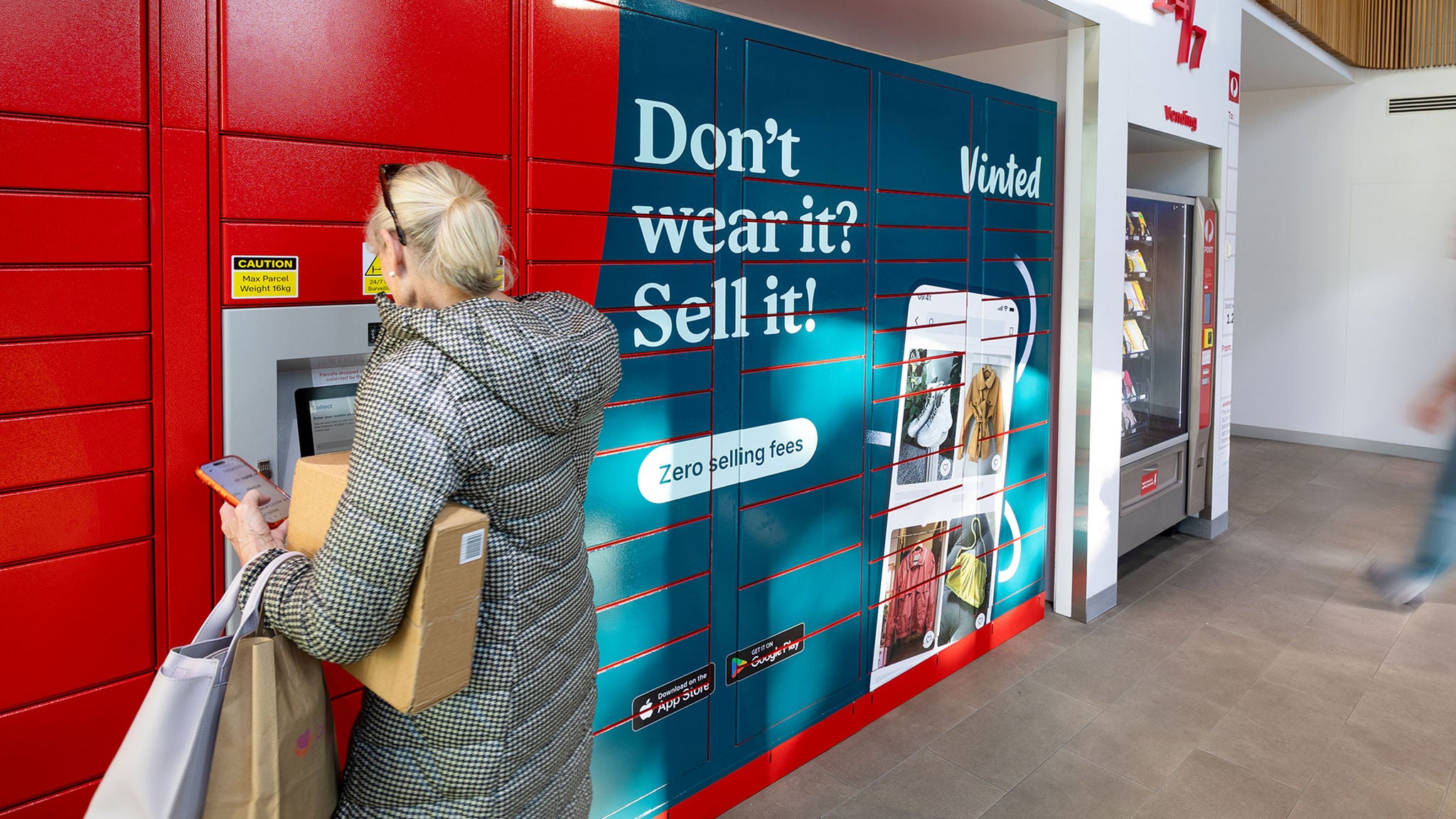
Then add the locker revolution. Selling an unwanted dress can now mean a few taps on your phone, a short walk to a locker and no queues, labels or awkward conversations. It’s almost frictionless. 

That convenience is incredibly powerful. 

For Australia’s reuse sector, Vinted’s arrival should generate enormous excitement — but also an important question: how can charities and reuse organisations make donating just as easy as selling? 


Shopfront:

Vinted’s launch in Australia happened almost overnight, and it’s one of the strongest signals yet of where reuse is heading. With zero selling fees, a free shipping promo from day one, and a global buyer base in the millions, secondhand has never been more accessible for Australian buyers and sellers. 

For the reuse sector, this is momentum, not competition. Lower selling fees  free up margin to reinvest in better photos, better listings and better tools. More channels and higher quality listings mean more ways for pre-loved goods to find their second home. 

Combining this with new formats like live selling, reuse in Australia is entering a genuinely exciting new phase for the Charitable Reuse community. The organisations that thrive won’t be the ones picking the right marketplace, they’ll be the ones visible and strategising across all of them. 


Minimist:

Vinted’s Australian launch is exciting for the future of resale here – but where will we be in a year or two? Handily, the UK gives us a case study. Vinted has exploded to roughly 16 million UK users and became the country’s third-largest retailer by revenue. 

UK charity retailers responded in wildly different ways. Some ignored it. Some tested a small collection. Some duplicated their entire online range overnight. Quite the mix. 

Why no standard approach? At the time, few teams knew how to tackle multi-platform e-commerce, so hesitancy won. So what can Australia do differently? Four lessons: 

  • No golden rule, only golden items – the charities who did best didn’t apply a blanket rule for what goes where, they made decisions on a per-item basis 
  • Every platform is viable, just not for your whole collection – don’t duplicate everything per platform; research, test, find your winners. 
  • Every platform is different, so your listings should be too – each platform rewards different formats (description length, photo style), so copy/paste falls flat. 
  • Work smarter, not harder – only expand once double the marketplaces doesn’t mean double the work (e.g. automation). 

We built our whole business around that last point. Tools like Minimist automate researching and listing an item in seconds – so you scale without the stress. 

To learn more about Vinted and other marketplaces, check out The Marketplace Manual – a free resource on who shops each platform, where sales come quickest at the best prices, which listings perform best, and more. 


The bottom line is, reuse is rapidly growing in Australia, and the market is expanding in a major way. Whether it’s resale platforms or physical stores, secondhand is the future, and the current market positively reflects its continual rise in popularity. 

Although we do not possess a crystal ball, the future looks bright. There is so much opportunity in this current market, and Charitable Reuse Australia is looking forward to continuing to platform our members and partners that are leading the space as we move closer to circularity. Check out Vinted Australia here. 

Sell and buy with Vinted | Australia PostImage courtesy of Australia Post.

A new financial year means new goals and new ideas for your organisation. With the rapid growth of the reuse sector, education, strong teams and empowered conversations are at the forefront of success. Your Charitable Reuse Australia Membership covers all areas of charitable retail.  

Charitable organisations, social enterprises and corporate partners that join Charitable Reuse Australia can have as many employees with access to resources and support as they wish. This means shop managers, retail staff and volunteers.    

Your Membership allows access to: 

  • Member Meetings – Benefit from connecting with all your peers at the Member Meetings. Discuss challenges and opportunities, learn how your peers tackle issues you are facing, and contribute to the Charitable Reuse Aotearoa strategic agenda. 
  • Benchmarking – Understand how you are performing against average charity shop retail benchmarks with quarterly datasets, to find out areas you can improve your retail performance. 
  • Lunch & Learn Recordings And Webinar Library – Access to a multitude of informative and progressive sessions with Partners and key sector figures unpacking current industry challenges, topicsand innovations. 
  • Social Campaigns And Assets – Be a part of our member-wide social campaigns and access a growing selection of social media assets to amplify core sector messaging, free for your communications and marketing teams to use across social media channels.  
  • Media Messaging – Gain access to current media messaging including pricing, donating and shoplifting, providing up-to-date information, statistics and copy ready for use. 
  • Spotlighting Your Impact – We love to champion the important work of our members through various opportunities for spotlights. From our monthly newsletter member spotlight to our blog, if you have news or updates we will amplify it! 
  • Conference – Attend the annual conference at discounted member delegate prices, to learn, connect and be inspired on the future of charitable retail and reuse. 

In addition, Charitable Reuse Australia advocates for government funded projects and initiatives to support the sector across Australia and Aotearoa New Zealand, and urges governments to fund the sector, cut charitable costs to strengthen circular economy outcomes, and boost social and environmental impact. 

With our recent launch of Charitable Reuse Aotearoa, the network is expanding across the Tasman, amplifying the sector’s impact and increasing the power of circularity. It’s a very exciting time to be a part of our sector. Our member enterprises are already leaders in this space and as Australia and Aotearoa New Zealand’s largest reuse network, we act as their mouthpiece. 

Our membership offers continue to expand with lots of exciting developments coming up. Be sure to sign up to our newsletter so you and your teams can stay up to date. If you have any further questions, contact Salma at salma@charitablereuse.org.au.  

Welcome to The Loop, Charitable Reuse Australia’s blog. This new platform will serve as a space to further expand on current happenings within the circular economy and reuse market, facilitate discussions with key figures and sector voices, and collaborate with stakeholders to platform innovations and services that are of interest to our members and partners.  

In an ever-changing and rapidly growing sector, staying updated and informed can be tricky. While new platforms, innovations and growth are exciting, it can be daunting. We are all working toward the same goal; to champion the circular economy as the foundation of a more sustainable environment and an equitable society. Members and partners of Charitable Reuse Australia is leading the charge in circular economy thinking and driving its uptake across Australia and Aotearoa New Zealand.  

The Loop will bring valuable information and conversations straight to you, providing a platform that amplifies future-focused thinking, and highlights organisations, partners and people who are living, breathing and advocating for circularity.  

We invite members, partners and everyone passionate about a circular economy to read, engage with and share these discussions, and to continue the conversation with friends, family, colleagues and teams to help grow awareness and inspire action. 

If you are interested in contributing a blog post, please contact Juliette at juliette@charitablereuse.org.au